From 3D-printed keychain
to government-funded initiative.
Plague Tags are collectible keychains and trading cards that make the microbes inside a hospital approachable, colourful, and understandable. It started as a keychain I was selling at work. It's now a funded hospital education project, and I design and manufacture all of it.
A doctor noticed a keychain.
I work at Sault Area Hospital, and on the side I sell things I design and 3D print. Dr. Lucas Castellani, an infectious disease physician, spotted the keychains and saw something bigger in them: what if the microbes his team educates people about every day were this approachable?
He recognized the educational opportunity. I recognized a project worth building properly. We developed the concept together, and Plague Tags was born: microbe characters people would actually want to collect.
Make the microbes collectible.
Each release pairs a collectible keychain with a matching trading card, timed to the season when that infection is most predominant, and handed out free through the hospital to kids, staff, patients, and families.
The characters are loosely based on how the real microbes look under a microscope, redrawn to be colourful and distinctive without losing the connection to the science. The educational content itself is supplied and reviewed by the hospital's Infection Prevention and Control team. My job is making it something people want to pick up.
Every physical and digital piece.
The medicine is the hospital team's. Everything you can hold, scan, or click is mine.
Identity & logo
The Plague Tags name treatment and visual identity, designed to feel like a collectible card game rather than a hospital pamphlet.
Character artwork
Every character drawn in Photoshop, based loosely on real microscope imagery. Deliberately expressionless, no mouths, no eyebrows, and named for their microbes.
3D models from scratch
Each character modelled in Tinkercad and Fusion 360, engineered to print cleanly as separate multi-colour components.
Manufacturing & assembly
Printed in multi-colour PLA on my in-house Bambu Lab print farm, then hand-assembled from separately printed parts into finished keychains.
Trading cards
Card design plus the production research behind it: stock thickness, paper, coating, and finish, coordinated through to factory printing.
The website
plaguetags.ca, hand-coded in HTML, CSS, and JavaScript in English and French, turning hospital-reviewed material into pages anyone can understand.
Characters you'd trade for.
Two releases are out in the world: Influenza and C. diff. Each one exists as artwork, a 3D-printed keychain, a trading card, and a page on the website.
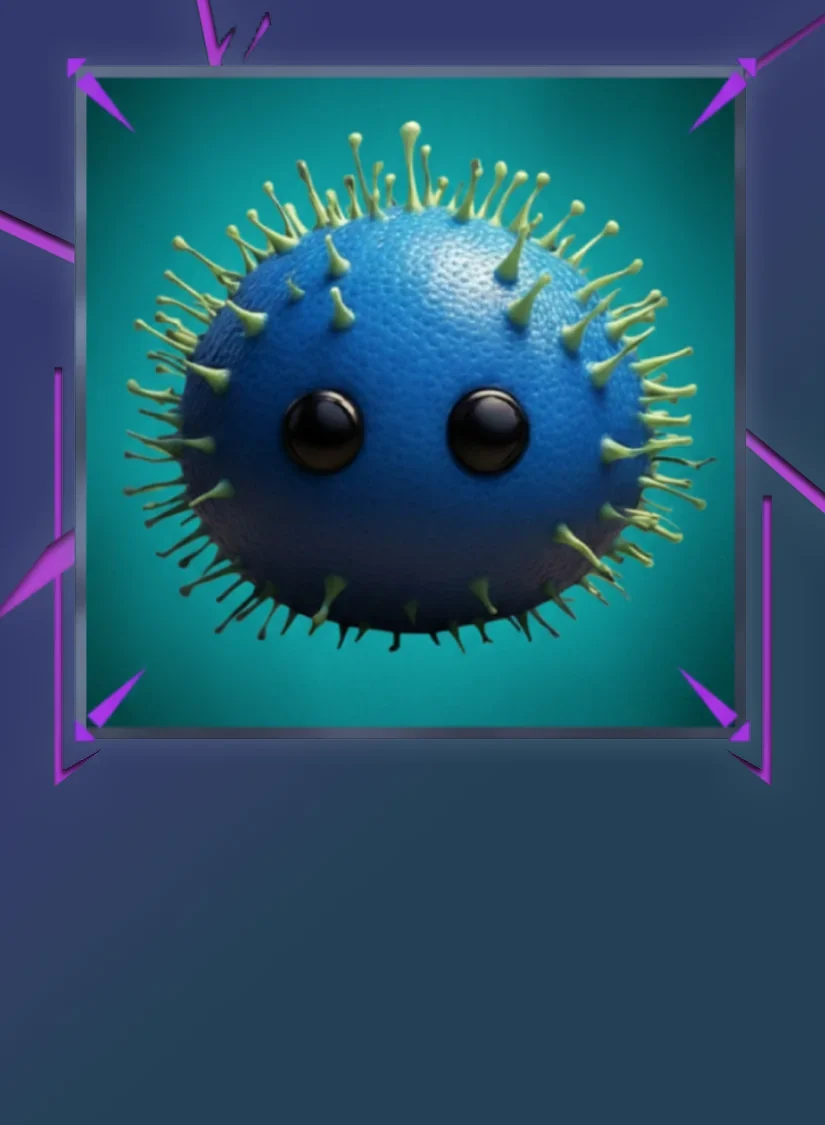
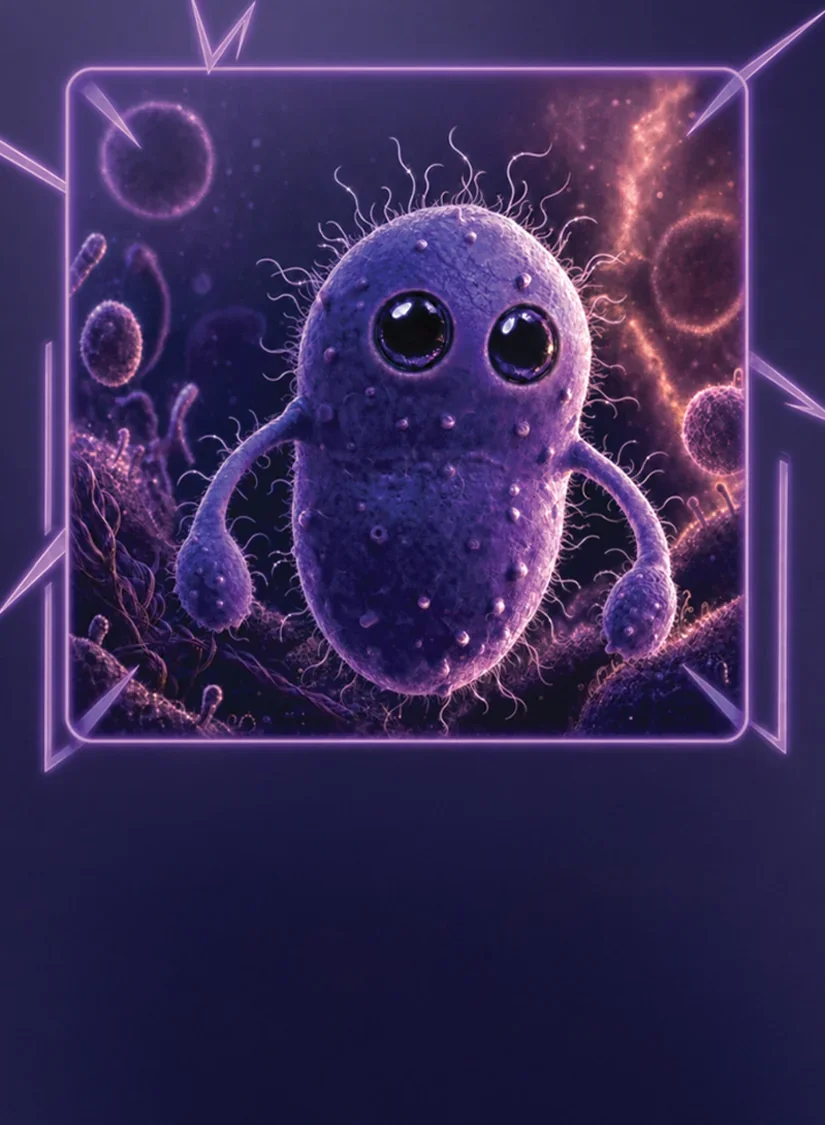
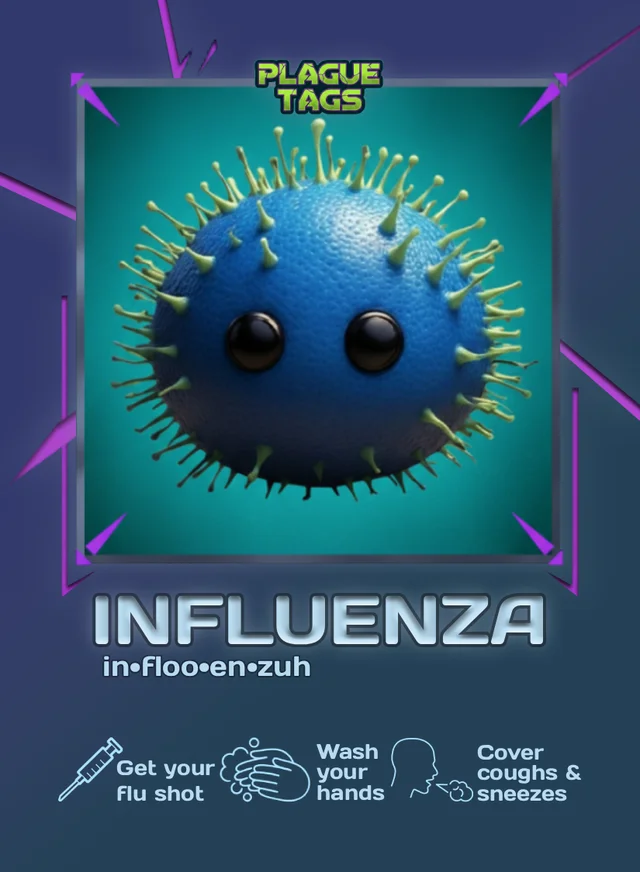
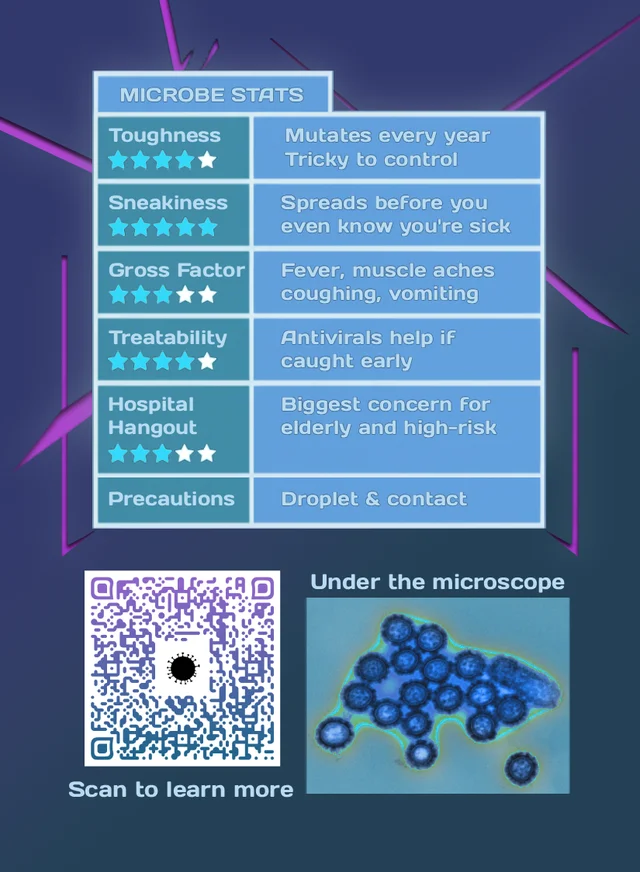
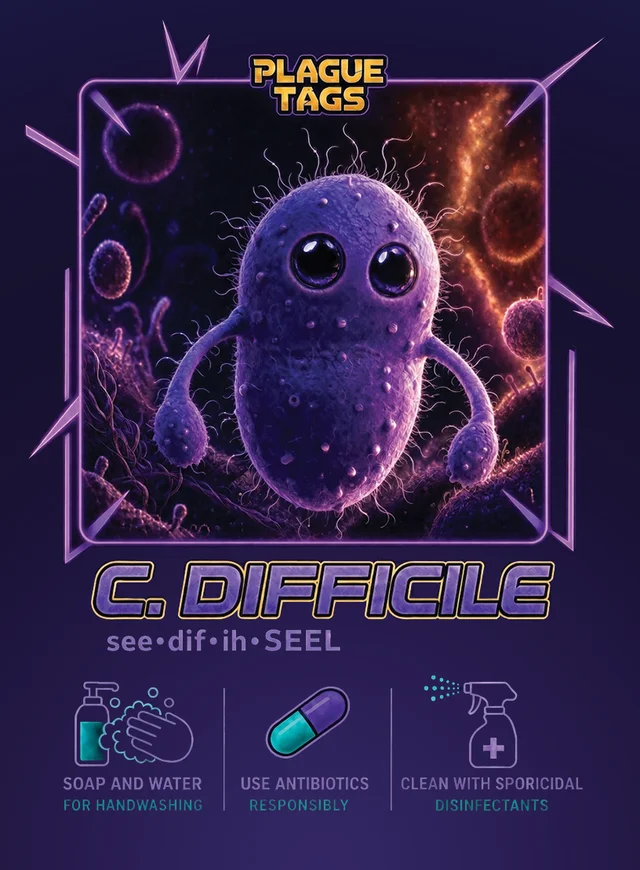
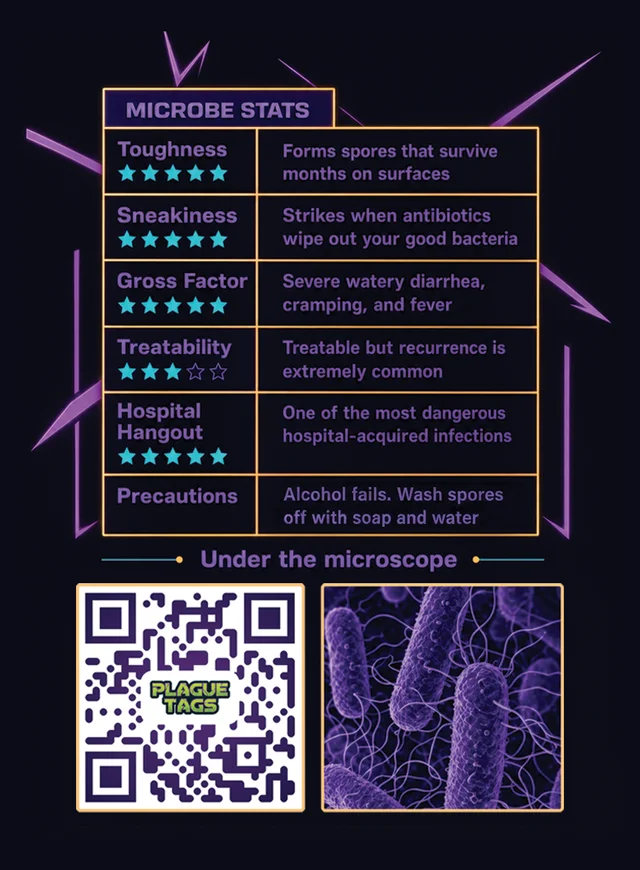
The physical cards are professionally printed with researched stock, coating, and finish. Recipients get the keychain and its matching card together.
Counts as of the C. diff release. Items are distributed free through the hospital.
The keychains became the proof of concept.
The early releases were funded personally by Dr. Castellani. To grow past that, Plague Tags needed real backing, and when the team went after it, the physical work carried the pitch: my designs and finished sets were used as visual evidence of what the project could be.
Plague Tags is now government funded, with a two-year mandate that includes a formal research stage run through the hospital.
I didn't write the grant, and the medical expertise belongs to the hospital team. But the thing that made the idea tangible enough to fund is the thing I build. That approval letter is the proudest line in my portfolio.
Plague Tags runs through Sault Area Hospital with a core team of four and more contributors across the hospital. The goal is four releases this year, and if future funding allows, the team would love to see it reach other hospitals and schools.
What this means for your business.
Plague Tags is research, identity, illustration, 3D fabrication, print production, a bilingual website, and the coordination to ship all of it through a real institution. One accountable person carried every piece from idea to finished product.
That's the point of JBrack Media. An ambitious idea doesn't need a big agency. It needs someone who can see the whole thing, start to finish, and actually build it.
Got an idea that doesn't fit a template?
Bring it to us the way Plague Tags came to me: half-formed, ambitious, and worth doing properly. We'll help you figure out the rest.
Next case study: 2 Brothers Lawn Care, launched from zero →